Last week I was in London for LDX3, LeadDev’s engineering leadership conference. 2600+ attendees, two full days of talks, and more ideas per square meter than I’ve experienced at a conference in a long time. I filled a lot of notes. Here are the ones that are still with me.
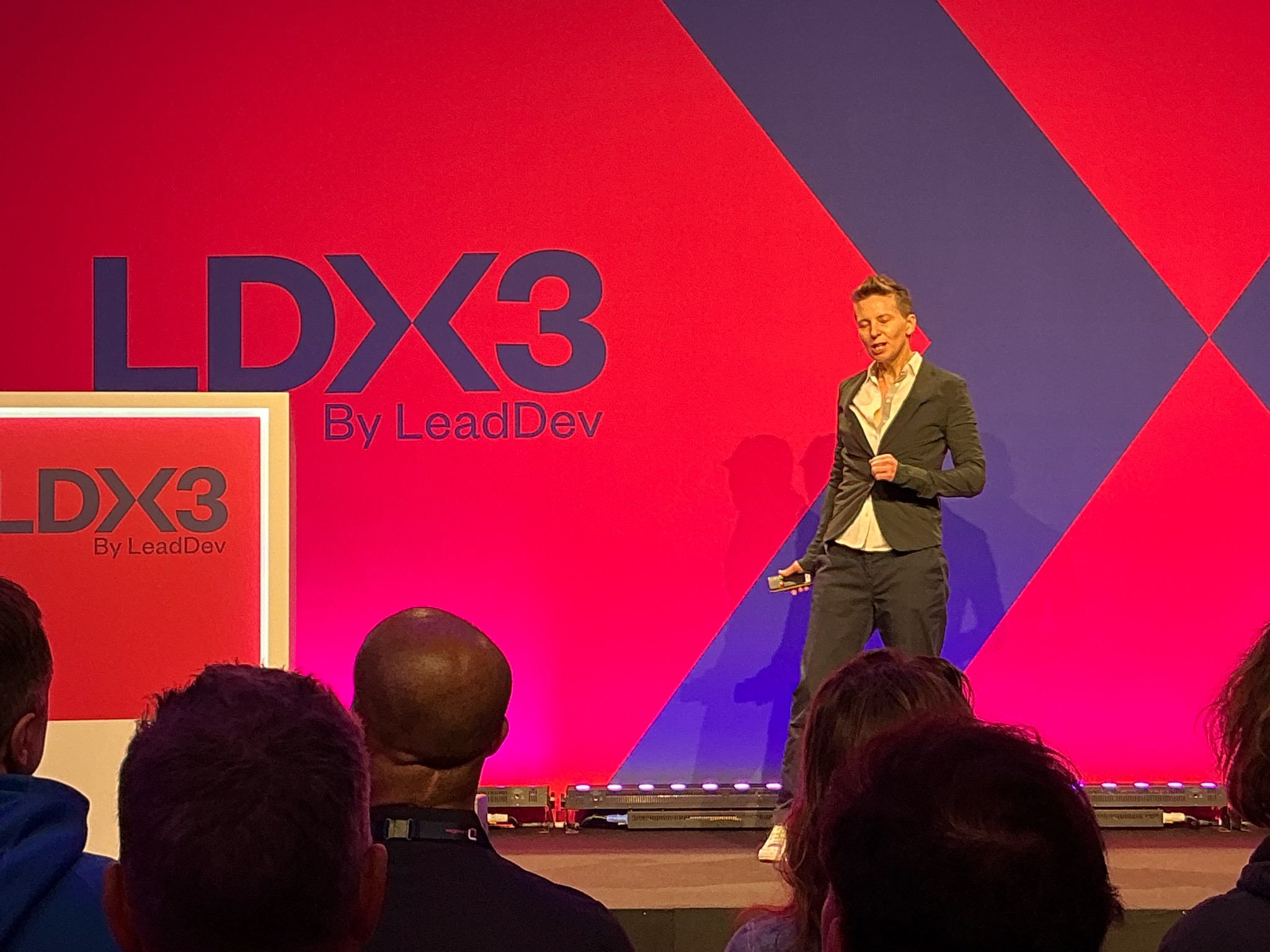
The opening keynote was Michael Lopp — Rands — talking about storytelling. His framework is simple: a good story has a Pledge (something ordinary), a Turn (making it extraordinary), and a Prestige (the final twist that reframes everything). He told an anecdote about Steve Jobs, unhappy about an early iPod protoype’s physical size, dropping it into a fish tank during a hardware review — bubbles floated up, proving there was air inside, proving there was room to make it smaller. Great story. Except, as Rands admitted, it never happened. Didn’t matter. The point landed perfectly anyway. That’s the thing about a well-constructed story: it pulls people in, makes them see themselves in it, and gets them invested before they’ve had a chance to argue. I keep thinking about this whenever I’m trying to bring someone around to an idea. Not everyone is a good storyteller — it’s genuinely a skill, and one worth deliberately getting better at.
Anna Selway from Monzo put into words something I’ve been trying to articulate about my own work lately: “From solving problems to shaking systems.” She was talking about the shift that happens at staff engineer level — you stop fixing things and start changing the conditions that cause them. It’s not a small reframe. The playbook she described (research the gap, form a conviction, then make it believable to the organisation) sounds obvious when laid out that way, but living it is harder. The thing she called “multiplication” — your thinking spreads by example, not by order — is the piece I keep coming back to.
Dominika Rogala’s talk on burnout was the one that got the room quietest. She named four dimensions: exhaustion, emotional distance, reduced efficacy, and an identity gap — that last one being when who you are at work isn’t who you wanted to be at home. The line that landed hardest: “Efficiency gains quickly turn into expectation inflation.” Add AI to a team and — somewhat counterintuitively — watch the workload somehow stay the same or even grow. She was also clear that burnout isn’t an individual problem, it’s a system problem. If everything is a priority, the answer isn’t better time management — it’s removing priorities. If too many meetings, don’t teach time management — get rid of meetings. Not burning out is a competitive advantage. I found that framing useful: it’s not just about wellbeing, it’s about being durable.
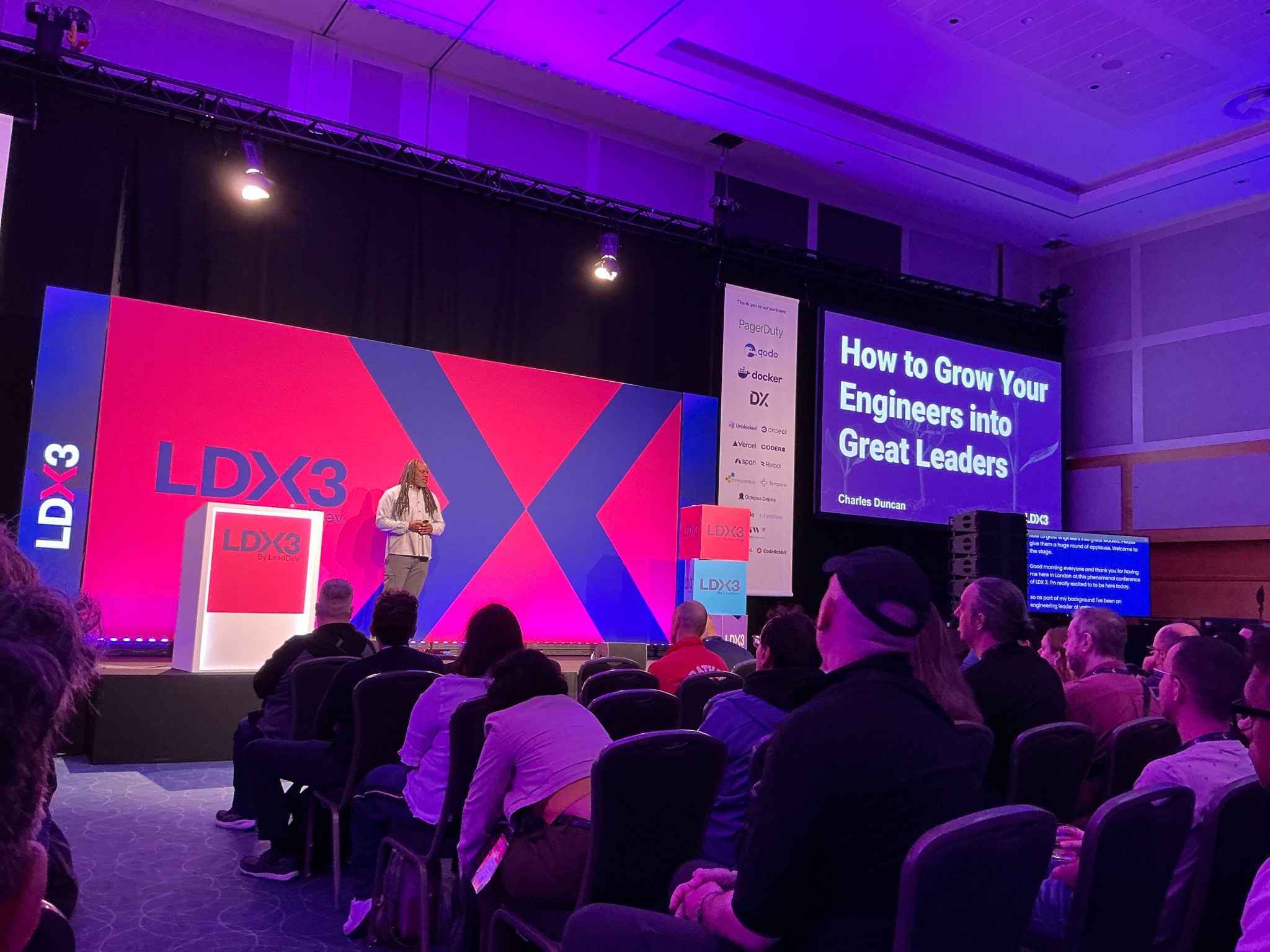
Charles Duncan from Netflix said something I scribbled down immediately: “We build scalable engineering systems, but we fail at building scalable people systems.” His argument was that leadership potential shows up well before any official title — in the small things, the way someone supports teammates, whether they take ownership when it’s not required. You either spot it early or you miss it.
And then Danit Nativ Navon from Meta on AI-native interviews, which Meta has been running since April this year. The whole talk was interesting but one sentence covered it: “You’re in a senior position not because you know everything. You’re there because you know what to ask.” That applies equally well to working with AI as it does to being a senior engineer in a room full of people smarter than you.
Good conference. I’ll be back.